

If you have not contacted your state rep, the sponsors, and the PA House Judiciary Committee to oppose PA HB 300, here's how. Do this NOW!
Happy International Women’s Day! The UN designated March 8 to be an annual celebration of women’s contributions to our world. Your Humble Author continues her salute to a few under-recognized women in this post in chronological order. All of these sheroes were medical and scientific pioneers. Millions of people worldwide are alive because of them.
March 4: Elizabeth Blackwell, MD, 1821-1910

Born in Britain, Dr Elizabeth Blackwell was the first woman awarded an M.D. degree in the USA. Many nineteenth-century physicians, including a few women, practiced without a degree, but Elizabeth Blackwell wanted to attain full professional status. She was rejected by all the major medical schools in our nation because of her sex. Her application to Geneva Medical School (now Hobart & William Smith Colleges in Geneva, New York) was referred to the student body. They accepted with great hilarity, believing that it was a spoof perpetrated by a rival school. Working with quiet determination, Ms Blackwell turned aside the open hostility of her professors, students, and townspeople. She earned her medical degree in 1849.
Dr Blackwell completed her medical education in Europe, but faced additional difficulties in setting up her practice when she returned to New York. Barred from city hospitals, she founded her own infirmary. Eventually, she founded a Women’s Medical College to train other women physicians.
Dr Blackwell’s educational standards were higher than the all-male medical schools. Her courses emphasized the importance of proper sanitation and hygiene to prevent diseases. She later returned to Britain and spent the rest of her life there, working to expand medical opportunities for women as she had in the USA.
March 5: Virginia Apgar, MD, 1909-1974
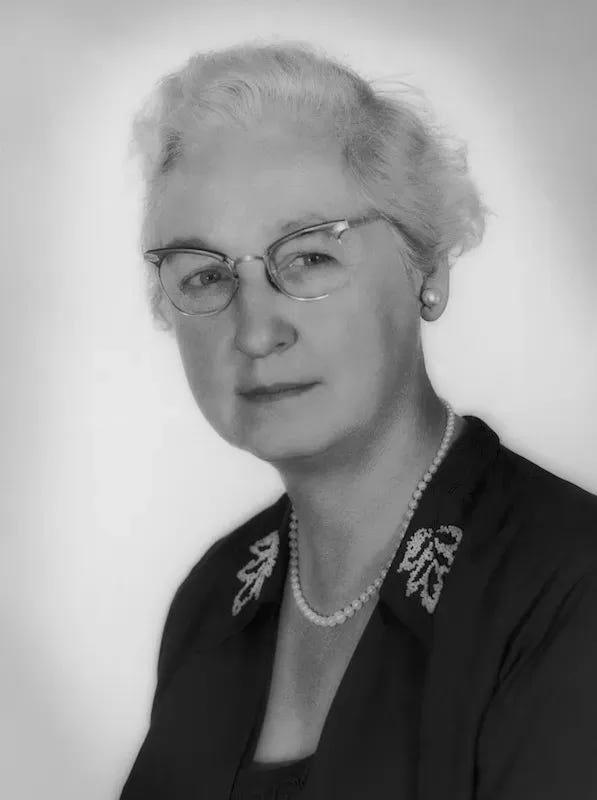
Dr Virginia Apgar, brilliant physician and humanitarian, is best known for her development of the Apgar Score in 1952, a system to determine whether a newborn infant needs special attention to stay alive. In most births at the time, attention was focused on mothers, not the newborns, which resulted in high infant mortality. Dr Apgar’s simple test, performed in the very first minutes of a baby’s life, measures an infant’s pulse, skin color, activity, and respiration very quickly, enabling medical staff to intervene if the infant requires assistance to survive. This simple but brilliantly conceived examination has saved countless newborn lives all over the world.
One of the few women admitted to Columbia University College of Physicians and Surgeons in the 1930s, Dr Apgar trained first in surgery, but shifted to anesthesiology, a new field that offered the opportunity to do groundbreaking work. She was soon named director of anesthesiology at Columbia, the first woman to head any department at the University. In 1949, after she built a major academic department in the discipline, she was named the first full professor of anesthesiology – the first woman to hold a full professorship in any discipline at Columbia University.
Dr Apgar shifted her career again in 1959 when she became a senior executive with the national foundation March of Dimes, and worked to generate public support and funds for research on birth defects. She was a spectacular fundraiser and public educator, greatly increasing both visibility and attention paid to birth defects.
In 1973, Dr Apgar became the first woman to receive the Gold Medal for Distinguished Achievement in Medicine from the College of Physicians and Surgeons, Columbia University. In 1994, Dr Apgar was pictured on a U.S. postage stamp as part of the Great Americans series.
March 6: Gertrude Elion, 1918-1999
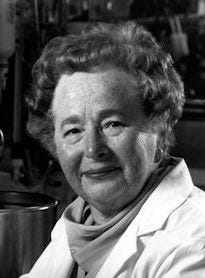
One of the USA’s most distinguished research scientists, Gertrude Elion’s Nobel Prize in 1988 capped a career devoted to combat some of the world’s most dangerous diseases. And she did not have a doctorate!
Ms Elion, working predominantly with George Hitchings, created drugs to combat leukemia, gout, malaria, herpes, and autoimmune disorders. She and Hitchings devised a system for designing drugs that led to the development of the AIDS drug AZT.
In the 1950s Ms Elion pioneered the development of two drugs that interfered with the reproduction of cancer cells to cause remission in childhood leukemia. In 1957 she created the first immunosuppressive agent, leading to successful organ transplants. In 1977, her work led to the development of the first drug used against viral herpes.
Gertrude Elion, who lost both her grandfather and mother to cancer, never lost sight of the humans whose lives her research affects. She said, “When you meet someone who has lived for 25 years with a kidney graft, there’s your reward.”
March 7: Flossie Wong-Stahl, PhD, 1947-2020
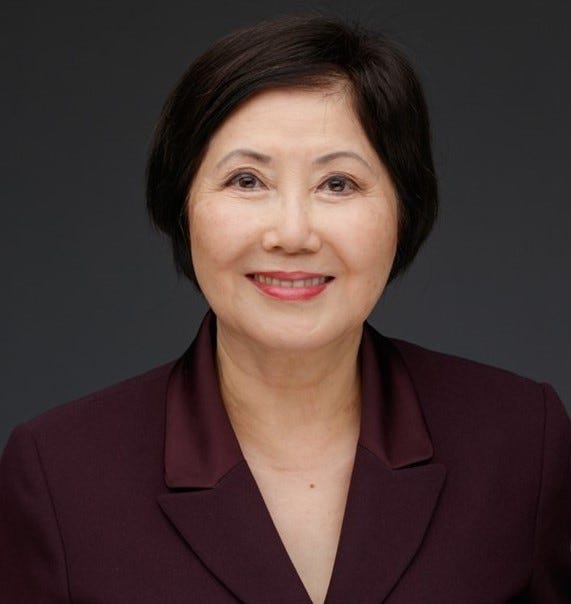
Dr. Flossie Wong-Staal was a world-renowned molecular biologist and virologist and one of the pioneers in research on HIV, the causative agent of AIDS. She and her team of scientists at the US National Cancer Institute were the first to molecularly clone HIV and to elucidate the complex structure of its genome. This accomplishment was instrumental in proving HIV to be the cause of AIDS, and in the subsequent development of diagnostic and therapeutic approaches for the disease. She and her team were also the first to show that HIV is highly heterogeneous in patient populations, forecasting the importance of combination (cocktail) therapy to combat AIDS.
Dr Wong-Staal obtained a bachelor’s degree in bacteriology in 1968 and a Ph.D. in molecular biology in1972 , both from UCLA. In 1973, she joined Dr. Robert Gallo’s laboratory at the National Cancer Institute as a Research Fellow. During that time, she became interested in the class of viruses called retroviruses, which were powerful tools in molecular biology. Furthermore, she was enamored of the idea that retroviruses could be potential pathogens in human disease. This notion, though initially not very popular among leading scientists, was later validated in the case of AIDS and certain human leukemias. Dr. Wong-Staal published more than 400 peer-reviewed academic papers on the subject of human retroviruses and AIDS. In 1990, based on the citation index of her published work, she was selected by the Institute for Scientific Information as the top woman scientist of the previous decade. She received numerous honors and awards, including membership in the U.S. National Academy of Medicine and the Academia Sinica of Taiwan.
In 1990, Dr Wong-Staal left her position as Section Chief at the National Cancer Institute and returned to California to assume the Riford Chair in AIDS Research and Professorship in the Departments of Biology and Medicine at the University of California San Diego (UCSD.) Later, she became Director of the AIDS Research Institute and co-Director of the Center for AIDS Research at UCSD. In 2002, she left academia to direct research at biotechnology companies focused on applying novel approaches to target cancer and viral infections including HIV and hepatitis C virus. In addition to research in these various settings, she also enjoyed mentoring young scientists from all over the world, many of whom have become accomplished scientists in their own right.
March 8: International Women’s Day!

PA4SBR salutes all women and girls who are fighting to preserve our rights to fundamental fairness, safety, privacy, and dignity. You are all sheroes!
For more info on International Women’s Day and the UN Conference on the Status of Women, go here.